Monday, October 05, 2015

Rock Hard Bodies

Rock Hard Bodies

an introduction to materials and art
2017
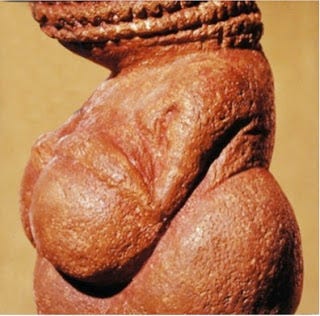

Here is a prehistoric artifact. What do you see? You might recognize a tiny woman, or a penis, testicles, breasts, a goddess, or the Woman of Willendorf. But if we were viewing this from a distance, or if we were holding it, it would first and foremost be a rock. Who thought a rock? Often when we look at artworks we move right into symbolic meaning and miss the most basic meaning: the materiality, the “thingly character,” in this case, the rockiness.
And while contemporary, capitalistic societies generally perceive rocks as “minerals” — inert, lifeless, passive objects, or as commodities to be exploited for economic gain, pre-industrial societies took a different view. Stones were alive, could grow, tell stories, hold memory, draw people together, and could even transform into other beings. Also, rocks were understood not as “minerals”(some western, scientific concept) but as petrified blood, fat, and bones of the ancestors.
Some Amazonian villages consider quartz and other rock crystals to be concentrated semen leftover from ancestral wet dreams. Likewise, in Japan the myth-histories say rice is hardened god-semen delivered to the people through the ancestral land, itself understood as self-hardening, “onogoro,” god ejaculate. The leaders of the Yoruba tribe in Nigeria claim they obtain their red clay from the vagina of the goddess Iya Mapo (and this sheds new light onto humans-from-clay creation myths like the Judeo-Christian one).
Links between food, clay, and flesh are in fact really common in the anthropological literature, as are associations between stone and bone. The Miwok people in California, just one example, are recorded as referring to a white mineral used in healing and body painting as powdered human bone. The mineral is obtained from a hole where the rock giant Yayali is said to have thrown the bones of people he ate. Stone and bone are conceptually linked because they share physical properties of whiteness, hardness and durability. Likewise, ochre is associated with blood because it is red, and when mixed with water looks just like blood. Interestingly, many Chumash and other native California puberty rituals involve women covering their bodies in red ochre and painting red symbols onto large stones.  Like men going through intensei physical sundance rituals, women, too, are covered in clay, or in some cases pollen, painted and told to leave it there on the skin for a while.  Importatn life moments are marked with minerals, suggesting a human-mineral deminetion that remains in place today, exemplified in various modern-day rituals. 
The Woman of Willendorf, pictured above, was supposedly covered in red ochre, and archeologists have found human bones in Europe and in the Americas, in Paleolithic, Mesolithic, and Neolithic burial sites, covered in red ochre, or as we understood it, the healing, petrified menstrual blood of some deity.
I want to emphasize this: in myth-histories around the world, stones can grow, they are alive, and we have to keep that in mind when interpreting stone and mineral artifacts. It turns out that most studies focus on symbolic meaning entirely, and completely overlook the materiality, or rockiness, of the object. They forget Marshal McLuhan’s famous mantra, that the medium is [also a part of] the message.
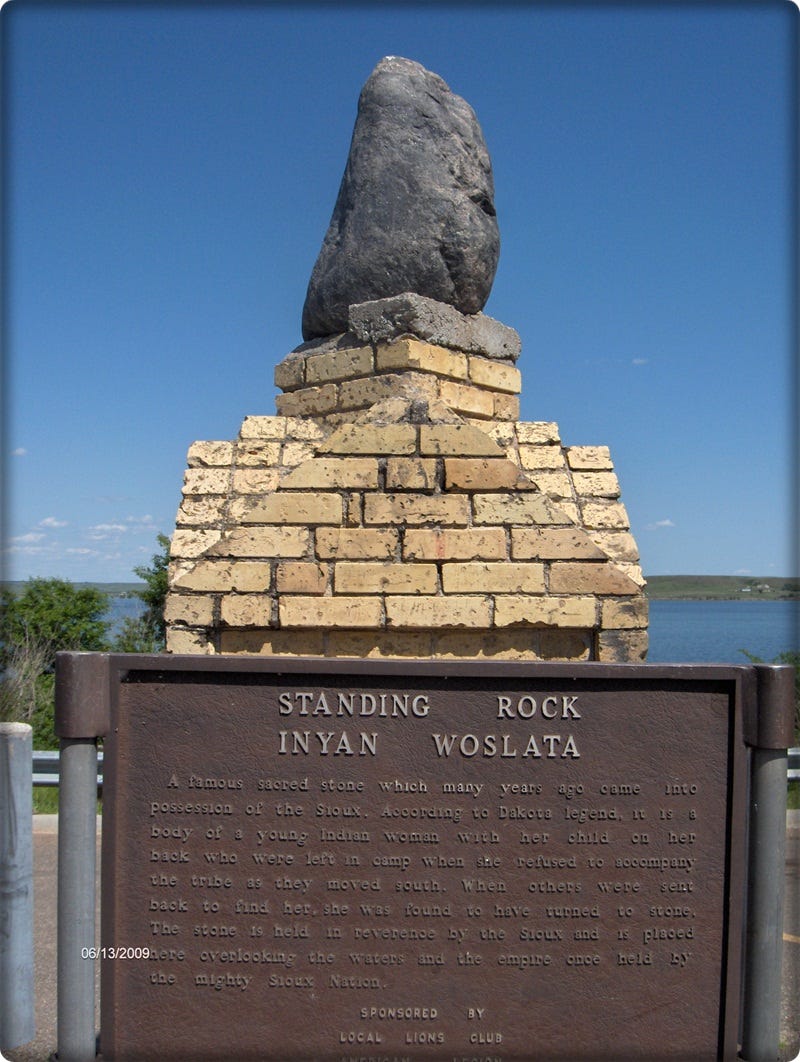
And the medium, in this case, is alive and can grow. Let's just assume that, for fun. There are examples in Australia and New Zealand where stones grow, get pregnant, and have a gender. In Melanesian societies, ethnographers have recorded examples of stones believed to walk around, dance, light fires, transmit and cure diseases, speak, procreate and kill. In Japan, this ancient idea that stones grow is expressed in their national anthem (the shortest national anthem in the world), and arguably in their famous rock gardens. The Chumash people of coastal California describe certain stones as people who turned into stone, and who can sometimes return to their human form. Plains and Pueblo Indians have similar stories. Standing Rock, Inyan Woslata (pronounced ‘iya woslata”) is an Arikara woman who turned to stone waiting for her Dakota tribe to return. The small woman-shaped boulder still stands as a monument marking Standing Rock, SD. Likewise, Lot’s Wife, in the Judeo-Christian myth, turns into a pillar of minerals because she looks back and refuses to move on. I wonder if this is a symbol for that universal truth, that if you are alwasy looking back, then you are frozen like stone and nothing can grow in your salty earth. 
In any case, the idea that a cultural hero can shift between human and stone forms is a key to understanding why mountains, rocks and human-modified stone constructions like the Woman of Willendorf, have held so much significance for indigenous people.
Hold that tiny red, seed-like sculpture in your hands. Imagine you are a prehistoric person, and you don’t know where the woman-shaped stone-yet-animate object came from because it was made ten thousand years ago and you just now stumbled upon it within the ruins of a small clay city. It could be a tiny woman who turned to stone and may one day turn back! You better keep her around. Or, plant her in the ground! Just try it! She may grow into a woman, The Magic Seed theory, as some of the clay figurines were planted in the ground (or were they buried?).
It’s interesting. When my parents were selling their house my mom’s best friend came over and brought a tiny Saint Joseph statue to bury upside-down in the front yard, facing the direction you want to move, or something. Who knows about this American, Catholic, Pagan earth ritual? Is it a cultural retrieval of animism? “Desperate times call for desperate measures.” Is it related to beliefs about making blood offerings to the ground, to appease the spirits under the ground, which is, I might add, an invisible realm more inaccessible than the sky. The world beneath our feet is harder to gaze into than deep space. Remember just a couple years ago scientists found an entire ocean some 400 miles beneath North America. The hidden ocean is apparently locked inside a blue crystalline mineral called ringwoodite, and it holds three times as much water than exists in all the world’s surface oceans! They say this discovery may help explain where Earth’s water supply came from, and how subterranean water affects plate tectonics, and in a way it confirms the Western mythic origins of the oceans, Leviathan, the blue crystal coated water dragon sleeping and stirring inside the planet. There is a great version of the deluge myth from the Jewish Midrash where Yahweh hates people and wants to flood the earth so he takes the small white stone off of Leviathan’s head he had placed there to keep her docile and lets her thrash around, causing water to burst forth from beneath the ground, a scene we saw so beautifully depicted in Daron Aronofsky’s film, Noah (2012). He put the stone back on her head, and vowed to never do that again. 
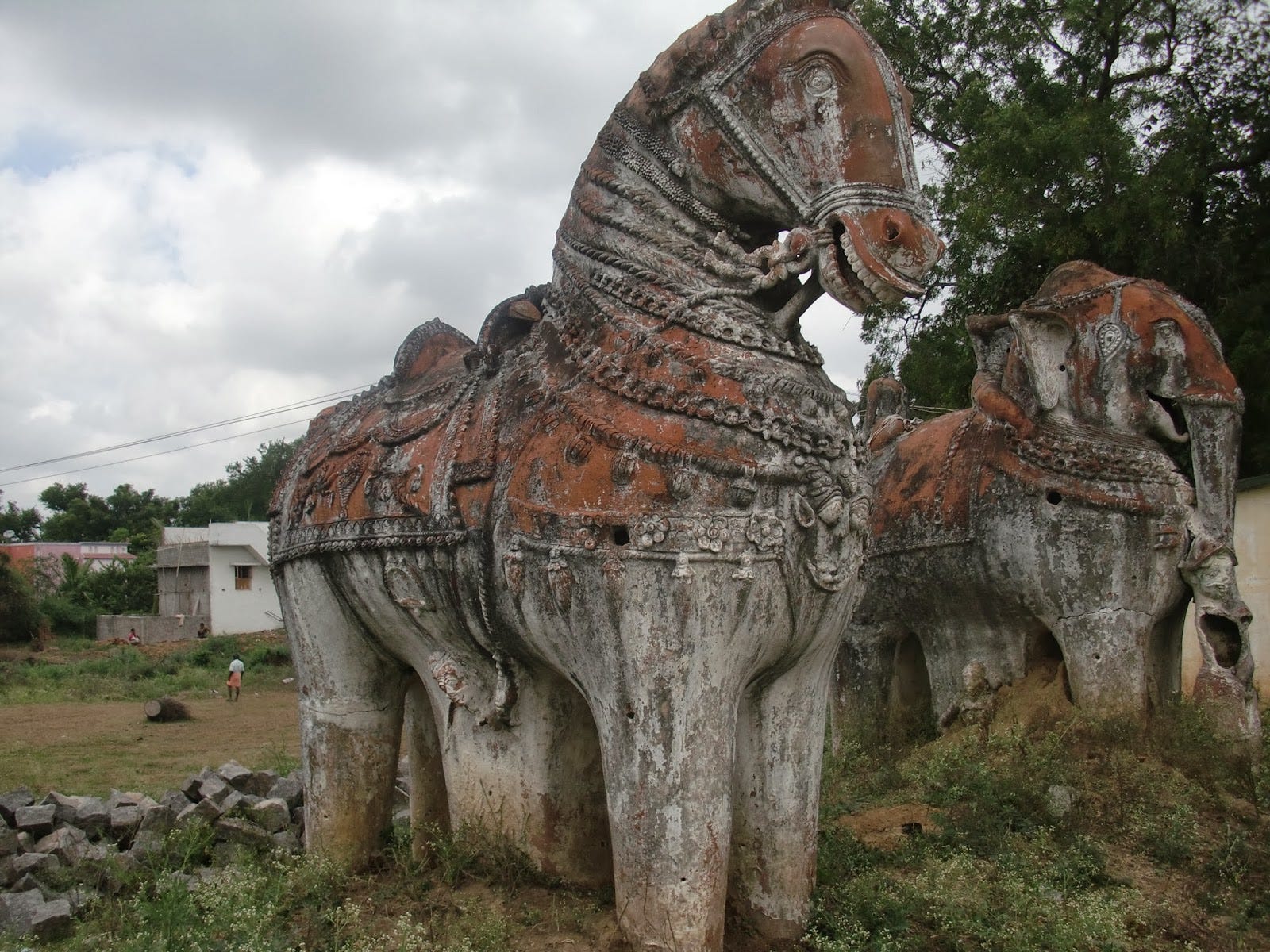
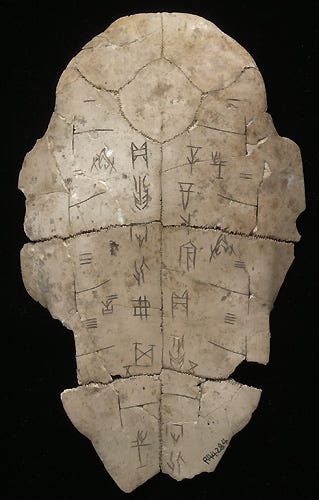
Bone-hard stone is made when clay sleeps with fire. We read in Marilyn Stokstad and Rosemary Joyce that the water left inside many of the female figurines found at Dolni Vestanice made them explode in the kiln. Now why would people so skilled in making pottery — we see they made vessels and clay bricks — why would they purposefully put wet figurines into the kiln to explode? Stokstad gives no answer, but there are three theories, or projections, I like. One is that the artist hated women and wished them harm, treating the clay figurines like voodoo dolls. We can spot misogyny twenty millennia away! Another, and the one that is most popular, is that the artist-shaman used the cracking of the sculpture like the Chinese shaman used the cracking of tortoise shells when placed over heat, or like how the gypsies use tealeaves — as a way to read the future or receive messages from the ancestors. These frozen pictures of chaos and order, these artworks, act like a Rorschach test to reflect back to us something else. The third projection, which I like the best, is that the life of the object recapitulates the life of a person, and destruction is part of the life. The sculpture begins as a small bit of clay, then grows, gradually hardens, and then breaks apart and returns to the ground. I am reminded of the great red terracotta horses in south India. Today, massive red terracotta horses, some of the largest clay sculptures in the world, are built to slowly decay. They are created during rituals where they are believed to be infused with divine life, and then afterwards they are deposited in lakes, or left at the edge of Tamil villages to disintegrate in a process of clay recycling. Likewise, beautiful pottery shards found in burial mounds all over the Americas point to a similar practice of destroying the clay artifact as a way of completing it.
I think Indian clay horses, Standing Rock, Lot’s Wife, my mom’s St. Joseph statue, and the mysterious realm beneath our feet all inform our interpretation of prehistoric art. There can be connections across time and space because everything is source material. Nothing is out of bounds. Do we want to know what these objects mean to us today, in a museum sense, or do we want to know what the objects meant to the people who created them? Maybe we want to unlock the power of these objects to move culture forward through time? I believe that the imagination is an opening onto the collective unconscious, and maybe even onto the prehistoric body from which all human culture springs. We no doubt touch the ground and bones we share with the dirt and soil and animals, even if we are also locked, in some sense, in our colonized projections. The culturally, historically situated meanings we bring to the objects mingle with the basic, boney, stoney, “thingly” materiality of them. If we give our imaginations plenty of material to work with, patterns emerge, and we can receive deeper, more complex and chaotic interpretations of these objects.
Selected References
Ballard and Goldman, (1998) Fluid Ontologies: Myth, Ritual, and Philosophy in the Highlands of Papua New Guinea. Bergin and Garvey, Connecticut.
Boivin, Nichole and Owoc, Mary Ann. 2004. Soils, Stones and Symbols: Cultural Perceptions of the Mineral World. UCL Press.
Chamberlain, B. (1981). The Kojiki. Tuttle Publishing, Tokyo.
Graves and Patai, Hebrew Myths: The Book of Genesis (New York, McGraw-Hill, 1966).
Houtmand, Dick; Meyer, Birgit, (ed) 2012. Things: Religion and the Question of Materiality, Fordham University Press.
Ohnnki-Tierney, E.(1993). Rice As Self: Japanese Identities Through Time. Princeton University Press, New Jersey.


Sunday, December 14, 2014

Infinity Imagined


Michel Serres, the great philosopher of science, likes to use the experiment of touching one’s own lips to point out how we are a subject and an object, a knower and known, simultaneously. Try it! Touch your lips like you are trying to quiet someone and feel first-hand how one moment you are in your finger, feeling your lips, and then in the next you are in your lips, feeling your finger! Feel yourself oscillate between the two positions effortlessly, naturally. In this simple activity, where are “you”? You’re in two places at once! How can this be? From a direct, first person experience, you are both the feeling of a subject knowing and you are an object known. You are inside and outside, self and no-self, emptiness and form at once with a gesture. Amazing!


I found a great new blog called Infinity Imagined with beautiful gifs and ideas you will love if you love space and science.

Sunday, November 30, 2014

The Importance of Story and Metaphor

Michael Garfield's talk "Entertainment as Social Action" is by far my new favorite of his. And I can't believe it! He mentions my work on landscapes in track 5: "The Importance of Story and Metaphor"! Thank you Michael!

For anyone interested, here is a short introduction to Landscape Theology.

Landscape Theology


Glimmering Space (the murder site of Matthew Shepard), oil on wood, 24" x 24", 2017

Where are you from?
Landscapes play a prominent role in our lives and myth-histories, and yet they are rarely acknowledged as actors. Geographers tell us that the landscape is an inert stage where historical individuals act. However, the story I want to tell is how places are “agentic.” Landscapes enable, inspire and constrain our activities. We are literally moved by them, and landscape elements such as trees, rivers, mountains and fields attract us to their surfaces and they shape societies. For example, archaeologist Christopher Tilley (2004) argues that our prehistoric social identities were created, reproduced, and transformed by stone outcroppings. Rock forms were landmarks and social sites, pegs and attractors within our cognitive maps, and viewing rock art was an important process by which we could tap into ancestral powers at specific locations. It also helped us anchor identity in those powers and locations.
Landscapes fill our lives with time and space. People pilgrimage through them as a form of their religious and secular, everyday lives. Through time-space routines of movement through landscapes we know where we are in relation to familiar places and objects and “how to go on” in the world. We also use them to ‘place’ a memory.
Space is not homogenous; some spaces are “wiser” and more sacred than others. Theologian Belden Lane (2001) says sacred space is a “storied place” because certain locales come to be recognized as sacred through the stories told about them. Chthonic forces are also at work in the complex process of sacralization. Geological features inspire specific stories, and only then can the sacred place hold and transmit culture across time. This is one reason why anthropologist Keith Basso (1996) assures us that “wisdom sits in places.” Basso also found that many Apache believe they loose their minds and fall into darkness when they forget the ancestral names of specific stones and places in the landscape.
In 1836, Emerson declared “every natural fact is a symbol of some spiritual fact.” Harvard Divinity School’s foremost Talmudic Scholar, Jon Levenson, makes a similar observation: “Geography is simply a visible form of theology.” Mircea Eliade is famous for pointing out the large, cosmic mountain that permeates many world religions as “axis mundi,” and we read in Judeo-Christian scripture again and again that “God is our rock.” Landscapes are situated inside people as people are situated inside landscapes. Feminist and semiotic Theologian, Sally McFague, puts it well: “the interior landscape is influenced by the exterior.”
The profound truth about religions isn’t just what Thomas Tweed says in his groundbreaking book, Crossing and Dwelling, that “religions begin and end in bodies.” Religions begin and end in landscapes. Bodies begin and end in landscapes. Landscapes, in a sense, begin and end in bodies and religions. Just think: religious disputes often center on landscapes, holy lands, promised lands, and the more basic conceptions of dwelling in one place and crossing over into another.
The geographical center of the Islamic faith is an enshrined black stone, the al-Ḥajar al-Aswad, at the Kaaba or “Cube” in Mecca. The oldest known Buddhist temple in the world, just recently unearthed in Nepal, is organized around an ancient tree. Today, people travel from all over the world to visit waterfalls, caves, and trees in national parks, and the 2013 United States government shutdown highlighted how economically and culturally valuable these spaces truly are. Landmarks and rivers move people into specific locations.
A horizon becomes a metaphor for the limits of our knowledge. Land and sky become metaphors for the body and mind, and they affect how we experience both. Spinoza may have been onto something when he regarded human emotions such as love, hatred, envy, “and other agitations of the mind,” not as vices of human nature “but as properties pertaining to it in the same way as heat, cold, storm, thunder, and such pertain to the nature of the atmosphere.” Theologian Beldan Lane: “There is an unaccountable solace that fierce landscapes offer to the soul. They heal, as well as mirror, the brokeness we find within.” Sky mind, ocean mind, desert mind, landscape mind.
The distinction of inside awareness from outside stimulus is only a convention. Merleau-Ponty describes the sky “out there”: “As I contemplate the blue of the sky I am not set over against it as a non-cosmic subject; I do not possess it in thought, or spread out toward it some idea of blue…I abandon myself to it and plunge into this mystery, it thinks itself in me.” Landscapes and humans exchange ideas and change one another.
A vast, uncluttered place can operate on the human mind to give rise to a singularity of vision. There is healing power in mountain silence and desert indifference. Landscapes point out “what matters,” or what, as a material substrate for the meta-system of culture, remains. Like our genes, they are more permanent than we are, and thus the landscape becomes a symbol for the eternal (Eliade’s “eternal return”).
In our myths, the prophetic vision always occurs outside the city and in the landscape. Abraham leaves Ur and finds God (and Melchizedek!) in the landscape. Moses leaves the walls of Egypt and finds God in the desert; Buddha leaves his tribe and finds God under a tree; Mohammed leaves civilization and finds God in a cave; Joseph Smith leaves his organized religion and finds God in the forest; Carlos Castaneda leaves the modern city and finds God in the jungle. This could be because as we move into the wilderness, the lights of civilization recede and then disappear. The landscape of nature gets bigger, and the stars can speak to one of vast reaches of cosmic time; stones murmur information from deep time; rivers, winds and rains tell stories of ethereal, fleeting time where nothing lasts long enough to even exist. This transient quality of the landscape is reflected in the Japanese Buddhist ukiyo-e “floating world” pictures, which flatten sky, mountain and sea into patterns on semi-transparent rice-paper. These oriental visions are the mirror opposite of the solid, stone, eternal landscapes and deep spaces of occidental spirituality.
Vincent Van Gogh left his job as a preacher to study God more directly through “the language of nature.” In the final years of his life, Cezanne painted over sixty images of the same scene; a view over fields to Mont Saint-Victoire. Landscape painters explore ways in which humans and landscapes and history are involved with each other, intertwined, tied together, depend on each other. They also show how the lines between imagination and our material reality are blurring.
Now it is widely accepted within the humanities and sciences that subject and object, mind and matter, human and landscape co-constitute each other. The seemingly irretrievable Cartesian wedge between the material world and the human mind is finally being dissolved. The reciprocity of imagination and landscape, of mind/bodies and worlds, of art and life implies that mythic narratives are not merely poetic descriptions of a certain world, but material performances of one as well.
Words, ideas, and basic experiences are lifted from the objective world, and because they become the substantive base from which all our thoughts and mythic narratives appear, we can conclude there is a material landscape from which the mythic archetypes are formed. These archetypes do not have real, breathing, itching, leaking bodies, but they are always generated by bodies which are situated within material landscapes. Landscapes are also always situated inside bodies, and the way we experience the sky and the earth influences values we attribute to the above and the below, which relates to how we experience our mouths and anuses, which is projected onto stories about the sky and earth, and around the circle we go.
What is objective and universal may be called transpersonal, or ‘archetypal,’ in the Jungian sense; it is that more-than-human place we share with others, that “earthly ground of rock and soil that we share with the other animals and the plants” (Abram 1996: 281). Merleau-Ponty: “My body is made of the same flesh as the world.” Therefore, if we wish to look for the “real archetypes,” we may want to pay attention to landscapes and their elements.
The cultural and material power of landscapes serve as a reminder that there are geological conditions that make possible the rise of consciousness, language, myth, and a sense of the sacred. These landforms operate in conjunction with sociocultural dynamics such as class, gender, and sex to weave our stories, our lives, together.

Wednesday, November 26, 2014

Thursday, October 09, 2014

The Dark Side of Blue Light

Well, if ISIS and ebola are not enough, here is a killer that is staring you in the face RIGHT NOW! Harvard Medical School claims that blue light, the light emitted by your computer, disturbs your ability to sleep, and contributes to the causation of cancer, diabetes, heart disease, and obesity. 

What you can do to keep these symptoms at bay: 

Use dim red lights for night lights. Red light has the least power to shift circadian rhythm and suppress melatonin.

Avoid looking at bright screens beginning two to three hours before bed.

If you work a night shift or use a lot of electronic devices at night, consider wearing blue-blocking glasses.
Expose yourself to lots of bright light during the day, which will boost your ability to sleep at night, as well as your mood and alertness during daylight.

There is also https://justgetflux.com/. After sunset it changes your monitor to a redder, more natural temperature. 

Tuesday, September 30, 2014

news

SBTRKT, one of my favorite composers, just came out with a new album you can listen to for free here.  Also, I sold a painting! "Flesh of the World" sold to composer Chuck Wild, creator of Liquid Mind and old friend of my parents. What an honor!


Tuesday, September 02, 2014

Website update

New paintings, honors, and thoughts can be found on my website.

Tuesday, August 26, 2014

Eli

 We are: cosmic blood worms
 disintegrating confetti
 death alive in every moment,
human - animals, angel meat, flesh, figures on a ground of expansive, imaginary worlds,
behind and within which is an infinite field of care, time, and energy.

Monday, August 25, 2014

American Tragety Sites


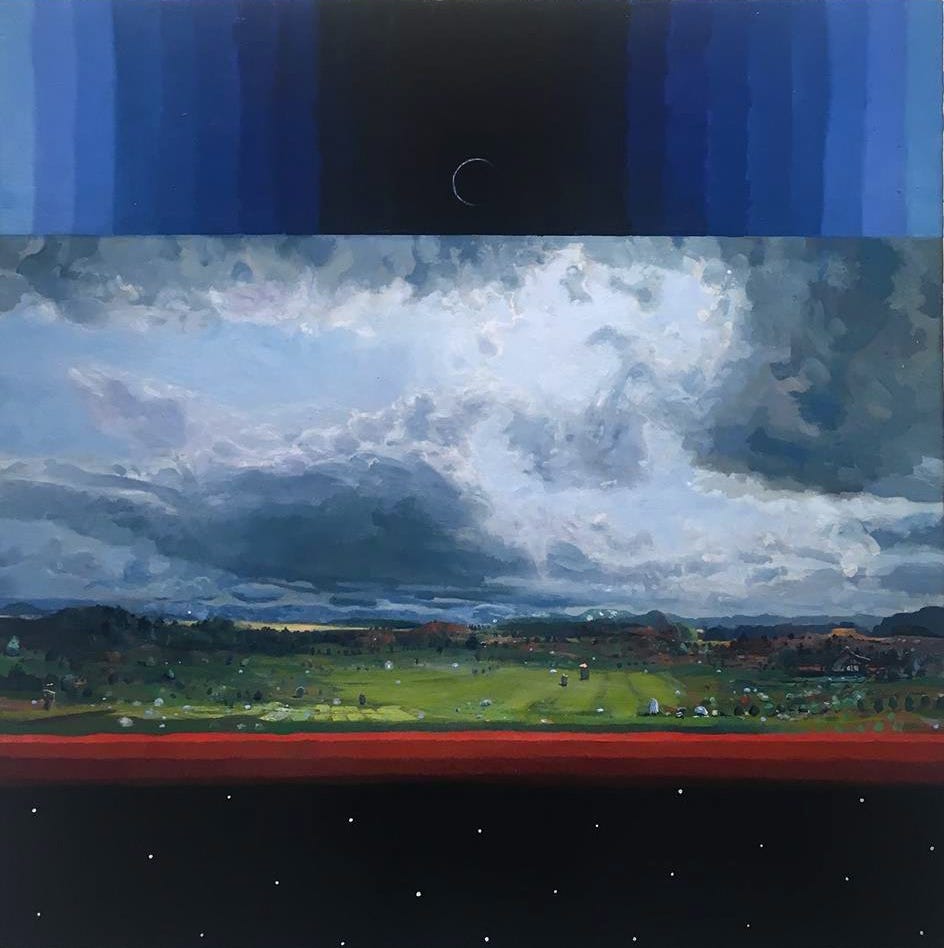
Some landscapes are celebrated as sacred sites because of the stories that are told about them, whereas others are marked as horrific sites of tragedy, humiliation, and cultural shame. To the uninformed eye, both places look the same—expansive, hilly, idyllic—which attests to the notion that every landscape is not just a physical place, but is also what theologian Belden Lane calls a “storied place.”

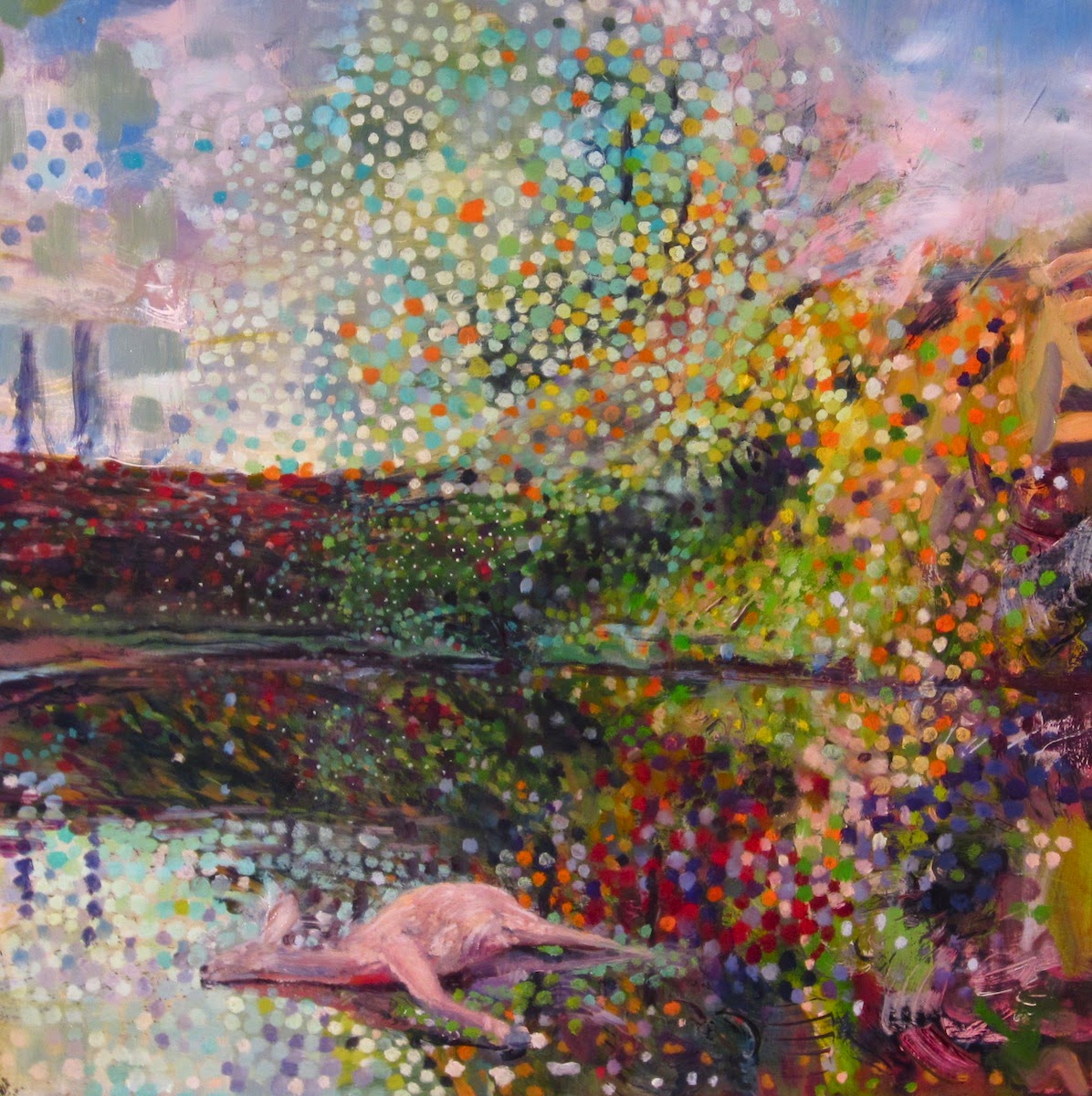
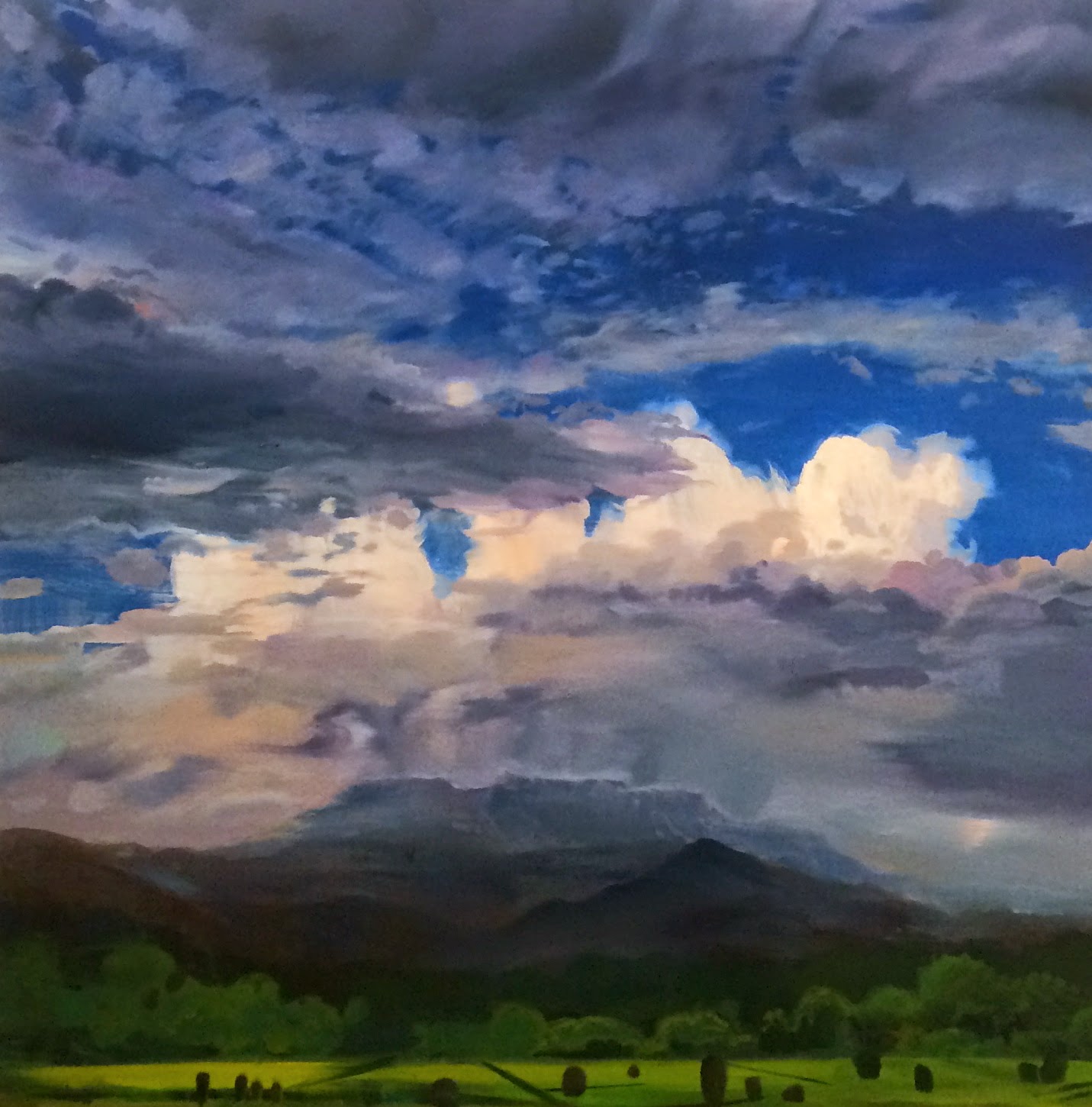
For American Tragedy Sites, first I research the historic place, and then I sketch, take photographs, and paint it. I finish the composition in my studio by mixing the rendered landscape with a totem of other symbols and nonobjective spaces.
Through the languages of realist landscape painting and religious icon-painting, I aim to honor these shadowed lands as holy lands, and to disturb conventional distinctions between what is sacred and what is shameful.

I believe certain landscapes offer insight into how we grapple with tragedy. Some sites of cultural shame are hidden away, avoided, or “obliterated,” to use geographer Kenneth Foote’s term. These sorrow-filled sites can get lost often by hiding in plain sight. For example, guests can pass through the old Hyatt Hotel lobby in Kansas City, drink coffee and mingle, and never know about the event that happened there in 1981—”the worst structural disaster in American history!” There is no plaque, no memorial, no spot to lay flowers or light candles.  The historic event, then, is more easily forgotten.

This intentional oversight or forgetting happens all the time.  If the memory attached to the site is too painful, or too shaming, the culture will attempt to erase it by re-landscaping or by destroying records. Salem, for example, kept no official record of the small hill where nineteen victims of the witchcraft scare were executed, so today its exact location is unknown. Likewise, the fence where Matthew Shepard was killed in Laramie, Wyoming, was promptly removed and the street names were changed to confuse tourists (“Out of sight, out of mind”). In both cases, the true location of the historic event lives on only in hearsay.
But now we have GPS, and landscapes push back, and people get behind them and lobby to have them preserved. The Minidoka Japanese Internment Camp site in south central Idaho, a true national shame site, was converted into farmland and torn down as quickly as it was constructed. But activists got funding and rebuilt its barbed-wire fence and ominous watchtower, two important communicators of the daily psychological experience of the Japanese-Americans imprisoned there during WWII. A few other elements of the Minidoka landscape remain: Fujitaro Kubota’s eerie rock garden, dusty labyrinthian pathways, the scorching sun, rushing river, and desert indifference.

If for some reason the actual tragedy site is truly lost or inaccessible, a culture will construct a miniature version, a memorial across the street. In the case of Matthew Shepard’s memorial, it is a bench at the university miles away. But there are also memorial gardens, parks, museums, and trees! There are memorial trees, like the prayer tree in the center of the killing fields of the Bear River Massacre site, probably the greatest forgotten Indian massacre in American military history.  “The first and the worst,” and it’s also easily one of the most beautiful landscapes and memorials I have ever seen. The place is woven into a wide river valley in the foothills of the Rockies, swarming with wildlife, flowers, and hot springs (the Shoshoni vacationed there every winter). The tree is somewhat hidden next to others behind the official, unimpressive, monolithic memorial standing in a gravel parking lot next to a trash can. The tree’s lower half is covered in freshly made dream catchers, medicine bundles, stuffed animals, beaded necklaces, colored flags, and gem stones. Buckets full of toys and chewing tobacco hang from branches near the trunk.

Every January the surviving Shoshoni and others gather at the tree, refresh the offerings, and pray that the Warm Dance will happen again one day.


Thursday, August 14, 2014

new work


here is my studio at Ucross

May all beings be Free and in Love.


Blog Archive